
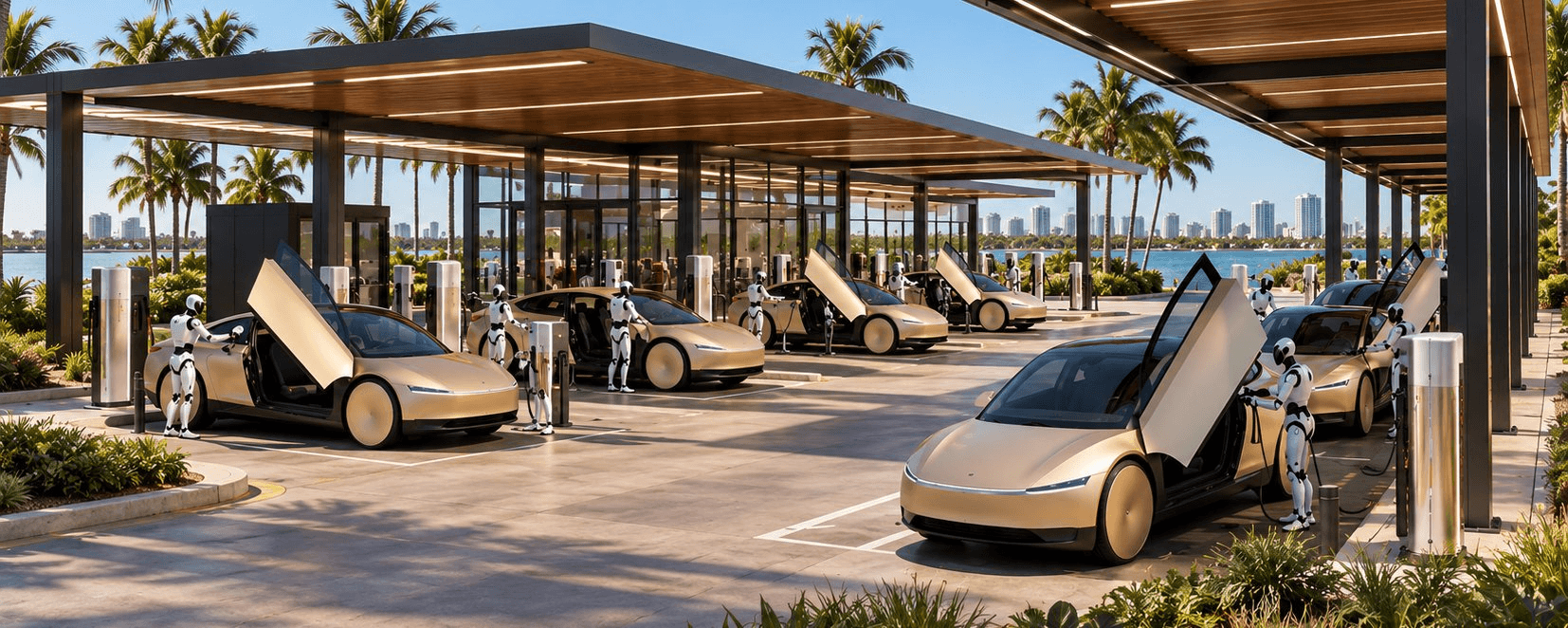
In our last article, we released our robotaxi calculator, where we modeled the economics for the Tesla Cybercab. The base case showed a payback period of 22 months and the bull case showed a payback period of 8 months.
You can play around with the calculator and set your own parameters here: https://fractals.finance/robotaxi/calculator
One of the more important parts associated with the model was depot and operations.
What even is a depot?
A depot is where a robotaxi stays when it isn’t driving someone. Think of it as the home base for these autonomous vehicles. Here’s everything that takes place there:
- Charging
- Cleaning/Sanitization
- Sensor/Camera care
- Inspections
- General maintenance
- Parking and staging
- Response
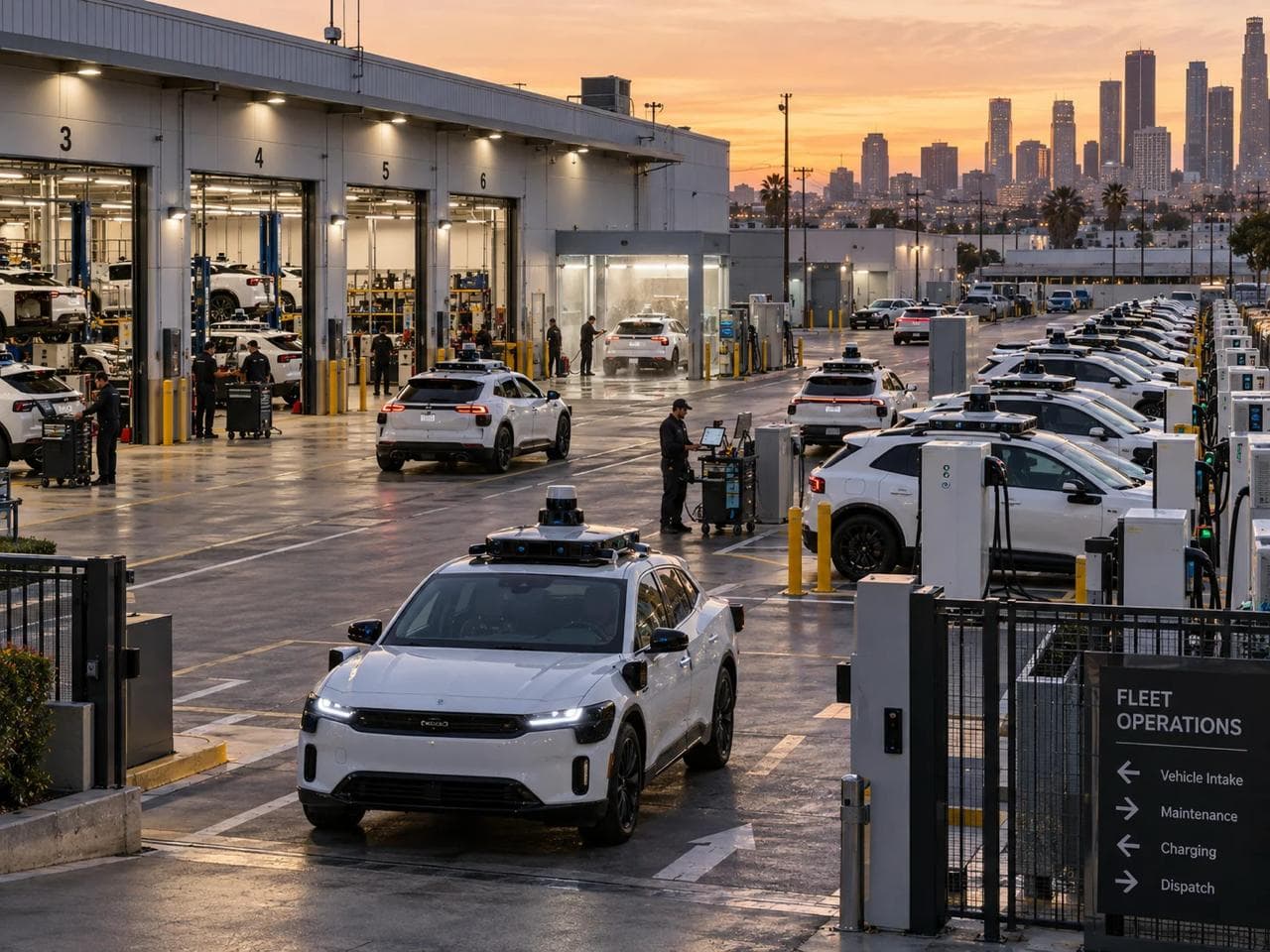
Waymo depot
Location and operational efficiency of these depots matters a lot to overall profitability of robotaxis. An efficient depot keeps cars out on the road, getting us to 20+ rides a day, the input that matters the most in our economic models. The depot has to sit inside areas where ride share is most active, and it needs a dependable operational team on site to keep everything running smoothly.
The Big Players
Voltera and Terawatt are two of the most established depot companies in the US. Voltera is backed by EQT and has raised $150M in debt from ING, Investec, and KfW. Terawatt has raised more than $1B in equity, plus a debt facility of up to $300M led by RBC this summer.
Neither started out with robotaxis. Voltera built charging for all kinds of fleets, and Terawatt began with electric trucks near the LA ports.
Today, both have shifted their business to focus on autonomy. Voltera manages Waymo’s depot in Santa Monica and merged with Revel, a fast charging network, earlier this year. Together they have 1000+ charging stalls running or being built across 11 US markets. Terawatt counts Waymo as one of its biggest customers and is reportedly looking to raise up to $1.5B more for AV charging sites.
Uber has also committed $100M to robotaxi charging infrastructure in SF, LA, and Dallas.
These companies are built around the biggest fleets. Waymo and Uber can fill a 60-stall depot on their own. Most fleet owners can't.
At the same time, a new wave of companies is building smaller depots for everyone else. They run local lots with a handful of chargers and can take on cars from a few different owners. The model is simple: a flat monthly fee per car, plus a percentage of the revenue the cars bring in.
Where Fractals Fits
In our model, capital buys the robotaxis, and operations are what make them earn. Managing the real world side of this isn’t new to us. Our team has deployed and operated hundreds of cellular radios and RTK stations ourselves. We know what it takes to keep physical machines online and operational in the real world.
We’ve been deep in this for months: meeting operators, boots on the ground building relationships, running different cost models line by line.
We’ve now secured depot terms for the first 100 cars of Fleet One, starting mostly in Florida and Texas, and we’re actively lining up more operators across more US markets.
The goal is the first 100 cars on the road, earning in Q1 2027.
Join our list to hear first when Fleet One opens up.
The people will own the machines.